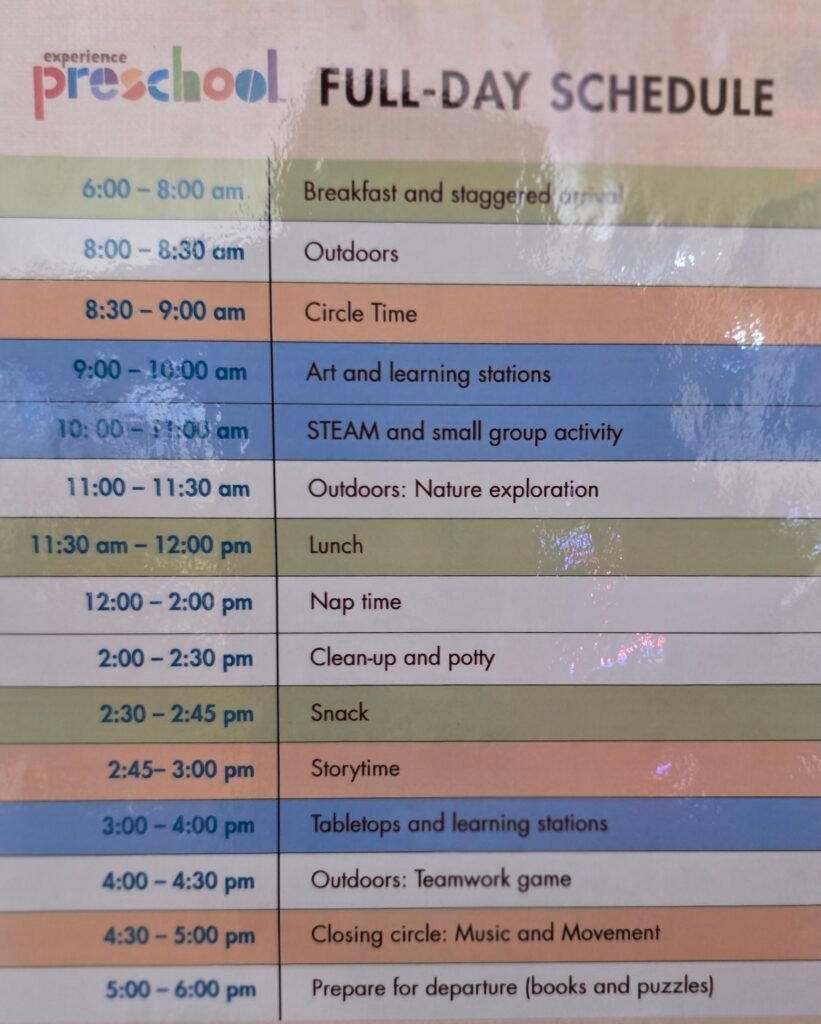
- Monday – Friday | 6:30 AM – 6:00 PM
- 303-667-6302
- 3129 Larkspur Dr, Colorado Springs, CO 80907


Eiusmod tempor incididunt ut labore et dolore magna aliqua. Quis ipsum ultrice gravida isus commodo viverra.
Our preschool classroom is designed specifically to allow children to begin developing greater independence, stronger communication skills and a deeper curiosity about the world around them. At this age, children learn best throguh a thoughtful combination of structured instruction, hands on exploration, movement, repetition and open ended play.
Our classroom provides a safe, welcoming enviironment where children can build confidence, form friendships, practice daily routines, and develop the foundational skills they will need for future academic success.
Our preschool program blends teacher guided learning with opportunities for children to explore, create, and make choices independently. each day includes dedicated time for early academics, social/emotional develoopment, art, music, outdoor play, small group insturction and child directed learning stations.
Children are introduced to classroom structure in a positive and age appropriate way. They learn how to participate in circle time, follow simple multi step directions, transition between activites, take care of classroom materials and work alongside their peers. At the same time, our teachers understand that young children need movement, flexibility, encouragement, and opportunities to learn through play.
Our classroom uses the Experience Preschool curriculum, a structured and research-based early learning program that supports development across all major areas of school readiness. Lessons are presented through engaging monthly themes, stories, music, games, art projects, hands on materials and group activities.
Children strengthen their vocabulary, listening comprehension, communication, and early phonological awareness. They are introduced to letters, letter sounds, storytelling, rhyming, books, songs, and opportunities to express their own ideas.
Children practice counting, number recognition, sorting, matching, sequencing, patterns, shapes, size comparisons, spatial awareness, and beginning problem solving skills.
Through STEAM activities and nature exploration, children are encouraged to observe, ask questions, experiment, compare objects, explore cause and effect, and learn about animals, weather, plants, seasons, and the world around them.
Art activities allow children to explore colors, textures, shapes and different materials. Our focus is not simply on producing identical finished projects, but on encouraging creativity, self expression, fine motor development and imagination.
Songs, dancing, rhythm activities and movement games help children develop coordination, body awareness, memory, listening skills, and confidence.
Children learn how to identify feelings, communicate their needs, share materials, take turns, cooperate with others, solve simple conflicts, and build positive relationships with teachers and classmates
Daily indoor and outdoor activities support balance, coordination, strength, spatial awareness and both fine and gross motor development